Showing posts with label FENI Conference. Show all posts

Tuesday, March 29, 2011

KP’s Super Random Raffle Draw Happy Fun Time: how KP created a better raffle system.

Ever participated in a raffle where all you get is a lowly ticket and wait for someone to stick their hand in a box to draw your number. The suspense is killing me as they call out each number slowly. Once the winner jumps up happy they won the prize, the moment is over. Could this age old raffle system be improved? Here at KP we did just that.

How to build a better raffle system. Normal raffles are quite boring. You get a number and you wait for a chance to get that number drawn. In some cases, you get multiple numbers, thus increasing your chances of winning but it still comes down to that one time drawing. To improve on that process, we introduce a three step process that gets more exciting at each step.

After you gather all the entries, which can consist of names, numbers or any other representation of the persons in attendance, it is entered into a database and KP’s random raffle system generator assigns them into a matrix. In the matrix, entries are randomly assigned a letter and a number and then displayed on the screen with two prompts. When a letter is drawn and keyed into the system, the list shrinks down to either 40, 24, 20, or 12 entries. An appropriate die (D6, D10, D12, D20) is tossed and the number is entered which will give us two names. The two finalists are brought up on to stage and each given a chance to call heads or tails. After whatever antics that may arise as to who calls the coin flip, the winner is determined. That’s it! Simple, fun, and exciting! Takes the normal boring raffle of just drawing a lucky name to something exciting.

But…
It wasn’t that easy, for me that is…

With the power outage and disrupting the afternoon classes, my master class I was teaching ran over time. What was suppose to conclude at 5 rand to 5:45. The teachers really wanted to know more about social media and I had to teach. The contest officially concluded at 4:00 but entries still kept coming in. I had less than 45 minutes to:
  1. Collect all Twitter, Facebook, and Wiki impressions.
  2. Build an algorithm to extract names automatically.
  3. Compile into a database.
  4. Test the interface.
  5. Setup during the awards reception and execute.

I had already lost half an hour and the awards reception had started without me. Here’s a detailed account of what I did for those who cared to know how I scrambled to build this in less than an hour.

The first step was to capture all impressions. I went online and cached all the twitter posts, saved into a text file. That took little time since I had high speed internet. I then wrote a little script that captured the usernames from each post and transferred it into a comma delimited append file. I had to monitor the script as it ran through the names for posting anomalies and error codes. I repeated the steps for facebook and had to tweak the script to account for the different posting styles and accommodate comments. Lastly, wiki was much easier since I can generate a report of who made edits and just parsed out my entries.

Some of you might ask, “why didn’t you write the code and test it out at home?” Well my answer is simple. I’m too cocky and thought I could whip it up on the spot. I had the process already keyed out in my head and it was just a matter taking what’s in my head and putting it in practice. I was overconfident and had my timetables set (except for the power failure) in my mind.

When I completed my task, rushed down to the reception with laptop in hand and set up with five minutes to spare.

The raffle went amazingly well. Everyone had fun, enjoyed the process. A newcomer to twitter with only a few posts actually made it on the final 20 board. When the list was brought down to the final two, Laura and Cameron were two perfect candidates. Laura had never tweeted before this conference and Cameron had only used it on occasion but when presented with this contest, they became twitter fanatics! They posted their experience throughout the conference, what they were doing, what classes they were taking, and expressed themselves through the digital web. It was an amazing experience to see these two and the 80 other participants use the online medium this way.

New connections were made, friendships formed and a history of their experience is forever captured online. Unfortunately, there had to be a winner. Cameron called heads and Laura agreed. Brooke, my lovely assistant from Talcott flipped the coin and it landed tails. The happy winner gets up and speaks about how she never used Twitter and that weekend she had contacted her students and asked if they would be willing to use this tool to communicate and collaborate. She got an overwhelming response.

That concludes our super raffle session. To see the video in action, see the below video link. It’s rather dark and I should have adjusted the exposure setting before heading up on stage. Oh well. The acceptance speech is amazing.

http://www.youtube.com/watch?v=BE1kgdMYUlg

Friday, March 4, 2011

FENI Day 3: My first and worst teaching experience ever!

Eager
Hopeful
Trepidatious
Nervous
Excited

These were just a few of the words that described my feelings on the third day of FENI. That afternoon I was to teach a 3 hour master class to 13 culinary arts educators how to get socially connected to the world through social networking tools. For the prior two days I’ve had teachers who signed up for my class come up to me expressing how excited they are to see what they will learn. Half of them were in my 2 hour workshop the first night and after getting a taste of what social media can do for them in their classroom, they were eager for more. I had some high expectations to fill. Am I ready?

At FENI, master classes are serious business. These teachers travel from all over the country and some from as far as South Africa to come and attend three classes during a two day period. They pay good money to be here but beyond that, they pay in time devoted to this conference. This isn’t like a local conference where you get up that morning, put on your chef’s coat and go to class for three hours and then go home. Here you spend many days in conference and many more hours traveling to get here. These teachers are committed to excellence!

The idea for me to teach a master class came shortly after I experienced a class gone wrong. In 2009 I took a class at FENI titled “Developing Online Lesson Plans & Curricula” taught by a computer teacher at the Le Cordon Bleu school of Las Vegas. It was one of the worst classes I ever took and I said to myself I could do far better with what I know even though I wasn’t a teacher by trade. All the participants took no value from this class. In 2010 I approached FENI about bringing technology into education and teaching a master class. They accepted my proposal.

In preparation, I wanted to create a workshop that has immense value. I want it to be hands on and not just me lecturing about what they should be doing. That is ineffective, and lends no value to the subject. As a computer guru, the biggest challenge I had was to take all the technical knowledge and information in my brain and translate it into something non digital natives can comprehend. I’ve always been able to bridge the gap from nerd to real world Las Vegas so I had confidence in pulling this one off.

I had so much prepared. In the computer lab I was going to take them through the social network, learn about why it will be important to their lives and why it’s relevant to students. I had planned to get each person to sign up to twitter and setup a group to start communicating to each other during the class. I was to have each person set up their own wiki and start collaborating on a class project. We were to use facebook to setup communication groups, set up events, and make announcements. I had so much planned.

On the day of the class, Chicago was experiencing one of their regular rainy days. It was pouring rain with no end in sight. I pull together all my equipment; laptop, netbook, projector, iPad, mobile internet device, camcorder, camera, pocket flip camera, and headed over to Washburn Culinary Institute’s computer lab.

I get there at 12:30, setup and ate lunch. At 1:45, 15 minutes prior to the start of class, I had two educators enter the room. After a few minutes of priming them for the class, the power suddenly goes off for the entire building. “Oh no, this can’t be happening,” ran through my head. I had planned for every possible problem from lack of computers to lack of internet but no power? How was I suppose to teach a computer class with no power? We sat there hoping it was a temporary power failure.

The fire department arrives 10 minutes later, it turns out that a woman was stuck in the elevator. They had to pull her out from the second floor and it actually turns out to be someone heading up to my class! We all got corralled into the dining room and tried to conduct class in a crowded noisy environment.

Make the best of any given situation… The class must go on. With that I plodded ahead and started discussing the concepts of social networking. I had a laptop with an hour of battery life so I was able to demonstrate Twitter, Wikis and Facebook. We all sat there, 13 of us, huddled around the table making the best of the moment. Despite the problems, they were all very eager to learn and we did make the best of a bad situation.

The busses came early to rescue us, so the class migrated back to the hotel. On the way there, I taught someone how to twitter using my iPad. This 50 year old chef had never done anything like that before and was excited to finally enter the digital age. We relocated to a conference room at the hotel where I set up my projector, screen and continued the class. Unfortunately I had lost a number of participants during this non digital transition to the new location, but six remained so we spent the next hour teaching social media tools. They all stayed past our scheduled class time by half an hour.

We could have stayed there for two more hours but there was the awards ceremony to attend and I had to prepare my super KP raffle engine for tonight’s drawing! That is another story I’m reserving for another blog post. Boy was that a fun hour of compiling 400 entries!

Was that the worst teaching experience ever? I would have to say no. Despite losing power and having my entire plans go to waste, I was still able to salvage the time and make it beneficial to the participants. I could only wish that things would have went better but now I know, under fire, the class can still go on. I only hope that I get another chance to do this again. I really wanted to teach. Really wanted to...

Friday, February 25, 2011

FENI Day 2: The social network in motion

The second day of FENI I encouraged the conference attendees to make use of the tools I presented at the workshop to put Knowledge into Practice (tm), the KP motto. Condensing 2 hours worth of material down to 15 minutes was a challenge. Checking the tweets that morning, there were already a number of people using twitter the way it should have been at the conference, creating a dialogue about their experience online. I could follow those individuals as they post about how excited they were about the day, their reactions to the breakfast and then later about what they thought of the keynote speaker. It was amazing to be able to have that dialogue online and to see how people collectively thought about a given event and subject. Checking Facebook, I saw some comments there but it started showing its own after people attended classes and started posting pictures there.

I was really encouraged by the reactions I got the night before and that morning. I felt that this is an excellent start to an already amazing conference.
Some quotes I got and heard about the workshop “The World is Connected”
  •  “You have broken down my social network barriers.”
  •  “I love how you explain things in plain English.”
  •  “Thank you! I got so much out of this.”
  •  “I wish it was longer than 2 hours.”
  •  “This workshop alone has paid for the entire weekend. “
  •  “If this is what we are to expect for the rest of the conference... I can’t wait.”
  •  “During the workshop I txt my students about using twitter and they responded in 45 seconds, all YES!”
  •  “I can’t wait to take what I learned and try it out with my students.”
  •  “Too much to learn! I need more time! Do it again!”
  •  “I learned so many different ways to communicate with my students.”
I am so encouraged at this point, I couldn’t wait to see how this experiment would go.

The rest of the day at FENI proved to be a very fun day as I put into practice what I taught the attendees. I Tweeted, took pictures and posted on Facebook and wrote about my class on the wiki. I saw others doing the same and got to experience their classes throughout the day. It was such a fun experience. I couldn’t wait for to see how well the next day would go as I’m teaching one of the master classes, a three hour hands on class on using these social tools in their classroom. I am so excited that I could never predict what would happen the next day. Never in my wildest dreams would the day turn out the way it did. What a disaster!

Thursday, February 24, 2011

Begin at FENI, the social network has: the 2.5 hour workshop strikes back

Reader’s note. This rather long stream of consciousness blog post, full of grammar mistakes, was typed on my iPad in the plane ride home from Chicago. Very little edits were made to keep the essence of the moment alive. My hope is that as I take you through this journey, you will be inspired and find a few nuggets of wisdom. This is not a literary masterpiece. This is a geek’s blog and I reserve polished articles to real publications.
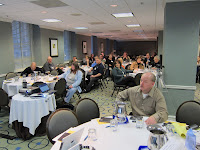
3:15 the workshop started. The attendees were eager to find out what this whole social networking thing is all about. 65 out of the 90 were in attendance. I began my presentation not knowing how the attendees and the conference would react. I was excited, I was nervous, and most of all I was fearful. I am not a teacher. I have never taught this many people at once, nor for that length of time. Who am I to stand up here in front of dedicated teachers and tell them things with authority? I don't have the experience that teachers have, a syllabus, a guide, or training. I only had my ideas in my head, an outline, and a PowerPoint. I had knowledge and the challenge was to figure out how to get all that information in my head out in a usable fashion.
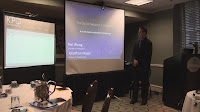
My first thought was about motivation. Why would teachers use a social network at the conference? It's just another thing to distract them, to fumble with, and it has no visible benefits. The “why” was way more important to me than the “how” so I spent most of my time tinkering that out in my head. Having experienced bad lectures on similar tools, I realized that yes, teachers have an interest see the need but the only effect those sessions have is give them more tools to complicate their lives. Yes, they are valuable and you can do many wonderful things with them but the reason why is usually missing in the equation. Step 1, tie it to the conference. Put Knowledge into Practice (tm) LOL. show them not only how to use the tools but how they will create a social network that reaches beyond the conference. Step 2, let them see the results in real time. I erected a secondary screen showing a live Twitter feed. Throughout the presentation I showed up to the minute comments. Step 3, do it! Step 4, motivate through awards and achievements, the KP Compass motto. Hmm, that just gave me a brilliant idea on my next project... The award was a social networking tool, a $250 Mino HD flip camera.

My next thought is to present this material in such a way that resonates with my learning style. I typically go too fast so I decided to use a lot of media to slow me down. I used many video clips to express key points to the audience, from sitcoms, news pieces, and YouTube training videos. It was high energy and I would measure my success if no one fell asleep during this. It was a challenge because many had just traveled to the conference and were suffering from travel weariness.

Ok, I prattled on enough about motivation.


3:15 The audience got to know Jon and I. I felt that my story was an important part of this workshop. No, I'm not an egotistical twit who loves to talk about himself. I normally keep to myself so that was stepping out of my comfort zone. Having grown up poor, eating free and reduced lunches, in a Chinese restaurant, being illiterate in school and possibly diagnosed with ADHD (if we had money) shows the struggles I had to overcome but more importantly, it shows I can relate to their students. I didn't grow up with a silver spoon, the best grades, multiple talents, etc. Heck, I don't have any artistic or creative talents, I draw stick figures. Jon's story is just as compelling, having discipline problems as a kid, going to alternative schools, boot camp and how the military straightened him out to end up in intelligence. We didn't have opportunity but we created opportunity and achieved!

3:30 I talk about the why by paralleling how students interface with the world through computers and games. My most important point about this aspect is not that we should use digital media but to realize that students need to control their own destiny because they've been taught that by Mario. The video game generation, I can write an entire paper on that subject, so I will use one quick example. Teachers grew up in an era where they were entertained by cartoons, which then became their icons. From Mickey Mouse to the She-Ra, they entertained passively during their childhood. For the Millennial’s, video games allowed them to control their character’s destiny to a goal. They have an active part in that character’s life, learned the limits of that character and worked with in the environment by following the rules established by the world the character resides in. Once a student figures out how far and how high Mario can jump, they set out to master the game. Ok, stop now Nai… or this will turn into a 10 page essay!

During this segment, a teacher talked about how he uses his XBOX to tutor students over the weekend. Imagine learning through your XBOX. How awesome is that! The kids are familiar with that environment so he just brought it to their world!

Oh, I just had a great idea after the fact. I should have had a reporter actively tweet feeding the session. Next time...

3:45 Twitter is taught to the audience and the feed is alive! It took a little while to get people signed up on their phones but about 8 new tweeters were hatched at that moment. I'm a proud father.

4:00 Jon's turn to talk about the hard data from the Speak Up national survey conducted by tomorrow.org. This data portion displays that we aren't just making this up. Dry but very compelling information. Jon tells about his experience in Afghanistan and relates it to how the social network would not have allowed such a grievous error to occur. It's declassified now but I won't write about it, I'll let him do it. His story resonated with the audience. I just wish he was there to hear all the comments about it afterwards. Hey I should have them tweet about it!

4:15 We are at our halfway point and we couldn't be any more on time. This was our litmus test to determine if our mental timing was correct! We guessed and worked hard at making sure we wouldn't run over. We took a 5 minute bathroom break.

4:20 The second half. This portion we focused on defining what social media is. I wanted the teachers to understand why their students use these tools and why they are a cultural phenomena. Many there didn't realize what social networking was about. They thought it was just people talking about going to the toilet or extreme narcism. Now they are armed with the knowledge to participate. I speak about my vision of the future of education and how rapid deployment of information may be the only way to reach these students. Because they are living in a multi processing parallel track world, linear single focused teaching models just aren't getting enough information into their heads.

Case in point. Kid on computer, watching YouTube, looking at Facebook, reading about their favorite video game, chatting with four friends on AIM while watching the latest episode of the Big Bang Theory. AND THEY CAN HANDLE THAT! Kid goes to school, is presented with one piece of information and told he/she cannot move on until that one piece of information is processed. What happens? They lose interest, day dreaming about that video game, think about how they can beat Bowser in world 5-5 while scoring a perfect coin challenge without dying or killing a Koopa. Oh, they missed something because the lecture started about something they know or can easily look up in 10 seconds of a Google search. “Make it relevant!!!” they scream in their head and “geez, why is it so slow?”

The information needs to be electronic, quick and easy to access. It needs to be relevant, well organized and non linear.  Google has revolutionized how we get to the information, taking the gathering gap away. Remember microfiche? The emphasis needs to be on how students can disseminate information and validate the good from the bad. Maybe with that skill, stupid urban legend e-mails will be a thing of the past. And finally, curriculum used in schools need to integrate a system of awards and achievements within a governed environment to bring relevance to the student’s perceived world. Bazinga! Will this ever be allowed in education, especially in CTE? One day it will and my dreams of KP Compass will make that happen.

4:30 Wiki is taught. feni.wikispaces.com was a wiki I created to be a resource and a repository for the teachers to virtually take back to their classroom. I showed the benefits of collaborative workspaces, alleviated concerns over privacy and showed how easy it is to locate and use during the conference. I found that many visited there and used it as their guide. The wiki has a goldmine of information on social media.

4:45 Facebook, the social network marvel. How can Facebook be used in education? Isn’t it chalk full of liabilities? Do we ban the use of it? NO WAY! It would be like banning the use of backpacks to carry outdated books. This out of all the social tools I talked about was the most controversial, and rightly so. There is so much about this that I can write a 5 page spread. I will try to summarize the most important ideas. The challenge was how to effectively use it. Simply put, nearly every student has a Facebook account. It's live and active in their lives. More importantly it's relevant to their lives. It would be like telling your student’s that you can only communicate to them using sign language. That's not relevant because they themselves don’t use that in their everyday lives.

Examples: Birdville ISD as a district embraced Facebook. They have a district page and a page for every one of their schools. I attended a presentation by them last year about using social media and lifting the cell phone ban at the HSTW (High Schools That Work) conference and it was an eye opener. Crud, I was supposed to write an article on that. Well I can now, having acquired new skills during this process. Anyway, their results were outstanding. Parent involvement in the school and their students skyrocketed. Discipline problems from cell phones nearly went away. Why? Because the students respected the privilege and didn't want to do anything to risk having that taken away. So, do we ban these everyday relevant tools from education because of the potential of problems or do we embrace these tools and reach our students in their world? Teaching social responsibility and managing their digital footprint should not be ignored! If you are afraid of it, go hide under a rock, you are the problem and doing the students a disservice based on your petty fear!  We need to be heard!  Change policy and perception for the benefit of all!

Wow, I got a little emotional there. Nothing angers me more than people sticking their head in the sand. I only hope my passionate words do not get me in trouble. Beh, why should I hide? LOL, this exemplifies the mental process we all have to struggle with and overcome.

Moving on. Anyone still reading this?

5:00 our normally scheduled end time and the start of wine hour! Geez I need a good glass of wine now. I had lost a few attendees by now, maybe they know everything about social media but I won't let that bother me. Many stayed despite the allure of free wine!

At this point we covered many tools and teachers have shared how they use Facebook. A culinary school in South Africa uses it for their students. A teacher took his kids on a culinary tour of Europe and they posted their journey and their parents were involved every step of the way halfway across the world. Talk about bringing home the concept of this workshop “The World is Connected.” I couldn’t have come up with a better analogy.

5:30 the wrap up. In the end the effort was not in vain. The great social media experiment was a stellar success. I learned a lot form this experience and have ideas on how to do it again and better. Can I scale this up to a conference of let’s say 500? 1000? 5000? The sky is the limit with social media. The comments were amazing and the feedback genuine. At this point, I can only hope that they take what I taught them to heart and carry it through the conference.

The next marker for success was that I taught the workshop without making it a large commercial for KP or my curriculum software. There is a fine line between doing something for the sake of education and something purely commercial. People can smell the stink of a corporate plug a mile way. I even had people come up to me later in the conference and say, “Hey, you were the one who developed The Sous Chef, or KP Curriculum or KP Food Science!” Yes, that was me, and it was only mentioned once during my bio and introduction (which many missed because they just flew in). I personally hate it when you hear a speaker do nothing but plug their book or service during the session. Attending 44 conferences a year, I see that practice year round. Bleh!

I also have to thank FENI for trusting me as a person of integrity to take this conference to a new level and make my dreams realized. If I were a school, a nonprofit, or a group, it would have been less of a leap of faith but I was a commercial, for profit entity. I don’t want to be one of those filthy corporations concerned with nothing but the bottom line or profitability. They bow down to the almighty dollar, a necessary evil. KP was built on a foundation of relationships and wouldn’t be here today without the fans of KP. That speaks volumes to me!

Soapbox moment*** In the end, the teachers in CTE are lacking the curriculum and the tools needed to reach kids like me. More companies need to devote time and energy to build these tools so the teachers reach the kids that are left behind. There are only a few dedicated groups and even that seems to be dwindling.
Soapbox moment end***

I will be posting the video of this workshop in the coming weeks.

In the session I mentioned that I think in parallel processes and go in a multitude of directions at once. I think this document exemplifies that mental orgy I face day in and day out.

It all started with a simple idea and a passionate dream. Dare I say it? He'll yeah, I want to revolutionize education!!!! I want to do this again! Who next? ACTE?

OK, I seriously got to stop writing. Time to actually read over what I wrote and publish it for the world to see. Now after reading it over I was tempted to write more and if I did, this portion of the document would be on the bottom of page 20!

If you do read this, please comment on my ideas. Let me know if I’m out of touch or right on track! I need to further develop these ideas and the more conversations I have the clearer the picture gets. In the end, my mind is like a painting. I start with a blank canvas (LOL moment) with no thoughts. Epiphany with a splattering of paint, then with each thought a stroke is made, each conversation, a line is drawn, and each document I read the picture solidifies to hopefully become a work of art.

Tuesday, February 22, 2011

Never shown video at FENI

Saturday morning, I was suppose to give the audience at FENI a primer on social media for 15 minutes.  That morning I created this funny video that was never shown as an example of how something can be created quickly to remain relevant to the time frame.  I wanted to post it here so that the half hour I spent on this is not in vain.  I hope you get a chuckle out of it!

FENI social media reactions.

Sunday, February 20, 2011

My 2 hour workshop at FENI


Teaching 60-80 teachers about social networking, I was fearful to how they would react. So many things can go wrong. With wikispaces creating controversies, teachers fired over facebook comments, the online social sphere seems to be hostile. Even thought there are so many factors I must lay their fears to rest.

My first class on social networking, which kicked off this year’s FENI (Food Educators Network International) summit was an overwhelming success. My strategy for this conference was not to just teach teachers about these tools but to create an atmosphere that encourages use of these tools. I’ve been to so many BAD teaching workshops that I felt that I can teach a good one. Putting my theories into practice and having the rubber meet the road, the attendees left the workshop not only knowing more about social networking but I gave them to tools to make it happen and apply to the classroom.

I will detail out the process of the class on another blog post since it can run on and I want to have some time to reflect.

From the reactions I got immediately after, I made an impact, opened their eyes, alleviated their fears, and gave them something concrete to take back home. People are tweeting their experiences and following what people are saying, sharing on facebook and making new friends, editing the FENI wiki and building a document. All these things are being built by the people. As the master architect, I’m proud that so many are embracing this medium and hope that this experience has enriched their conference experience.

I won’t count this as a success yet. If they take these tools and apply it to their students, then I will say that was worth my time and effort. So far so good. I see this as something that will be great for FENI.  Best conference ever?

Tonight will be the raffle using KP’s new technological whizbang drawing engine. It will be a fun night and I can’t wait to present the prize, a flip mimeo HD 4 GB 4 hour camcorder. May the best social networker win!

Tuesday, February 15, 2011

Thoughts on Twitter in the classroom.

Four days till my big workshop at FENI. Today I write about my findings on using Twitter in the classroom.

Twitter has become such a universally accepted medium of self expression and has been embraced by the entertainment industry as a very good way to reach people who are interested. The key term is interested. Most students are disconnected in the classroom, daydreaming or thinking of things outside of what they are charged to study, maybe even that Twitter feel of Lady Gaga they are following, so how do we motivate them to even embrace this socially accepted tool in education. In the post secondary world, there are countless possibilities to use Twitter and many great ideas have already made its way to the classroom. Used to announce, report, submit, identify and assign, twitter can be used in a variety of ways in college. I had some great ideas but found most of my ideas reinforced and expanded on other blog posts. I will highlight some of the best ones later.

In the high school, things are different. There is a limitation of technology. There are policies in place that prevent that from happening. There is a lack of support from faculty and administration. There are filters that restrict what can be done. Many factors play against using this very useful tool at the high school level, which is a shame. The last thing school should be is to further the digital disconnect in the classroom by removing methods of expression that are commonly found in the real world.

There are a few intrepid teachers in accepting schools who have successfully designed this till into their classroom. Some ideas that come to mind besides the use for communicating to students assignments after school or making announcements are:
  • Summarize a passage in 144 characters.
  • Research on current events.
  • Tracking worldwide trends.
  • Asking questions (for the shy ones).
  • Much more from links below.
I feel that with time, High Schools will eventually acquiesce and not run in fear of this tool. Like any tool, with careful guidance, it can be used to make wonders.

Resources I’ve encountered during my research. Most date around 2009.

I hope this is useful.

Twitter in education resources
100 tips, apps and resources for teachers on Twitter
Twtpoll - poling on twitter made easy!
Thoughts on twitter in academia - a blog post with some poignant thoughts on use.
Twitter writing exercises - a blog post of a teacher who tried twitter for an assignment and the results.
Can twitter be used in education - a paper presented in 2008 on microblogging
UT Dallas Twitter experiment - you tube video of an ABC news feature
Twitter for Teachers - Why use twitter in teaching and learning document.

Monday, February 14, 2011

The Social Networking Challenge at FENI 2011: Inception

I’ve been actively investigating uses for social networking tools for the past month now so I finally decided to take my own advice and start to blog about it.

I’m a computer guru, an internet junkie, and a gadget freak. I try to use just about every new whizbang tool out there or at the very least become familiar with them. When I started this project six months ago, setting the theme for an education conference called FENI, I thought I knew a lot about social media. What I discovered was only the tip of the iceberg.

The goal this year at FENI (Food Educators Network International) was to not only spend an enriching weekend learning new cooking skills and techniques but to enrich culinary teachers with new technological tools through social networking. I was charged with the task (as a technojunkie) to make that happen. Many teachers are not behind the technological cue ball and only somewhat familiar with the tools but as they become easier to use and widely accepted as the norm, many are getting just their feet wet in this whole new world. Feet wet is not good enough and many are getting lost, with little to no guidance.

The theme this year at the 13th annual FENI summit is the world is connected. I’ve been participating at FENI for over five years now. Year after year I meet amazing educators who are dedicated to their profession and craft. I would often ask the question, “how was your class?” The responses varied from exxstatic to meh. I was frustrated because my reach was only a dozen or so teachers so the idea brewed in my head to engage teachers using existing social networking tools to create an online atmosphere of sharing. Simple task, right?

There is an abundance of tools, all taking their own angle to satisfy an audience. A few have emerged as the best of the best and through innovation, these tools are not used by the technoL33T anymore. Networking tools are great for entertainment arenas but in education it’s a trickier beast to adapt. Here at the summit I will try to teach everyone how to twitter updates, edit a group wiki, share photos on facebook, and eventually blog about their experience. I have five days till my two hour workshop, then a 15 minute primer the next day and a three hour master class on the final day.

Excited, very much so, but I’m nervous about how this challenge will be accepted. I guess time will tell.